Boost Mobile / Shipped 2026
From Dead-End to Conversion
TOOLS
Figma, Quantum Metric
DURATION
3 weeks, 2026
MY ROLE
Product Designer
OVERVIEW
Resolving edge case friction using design system components.
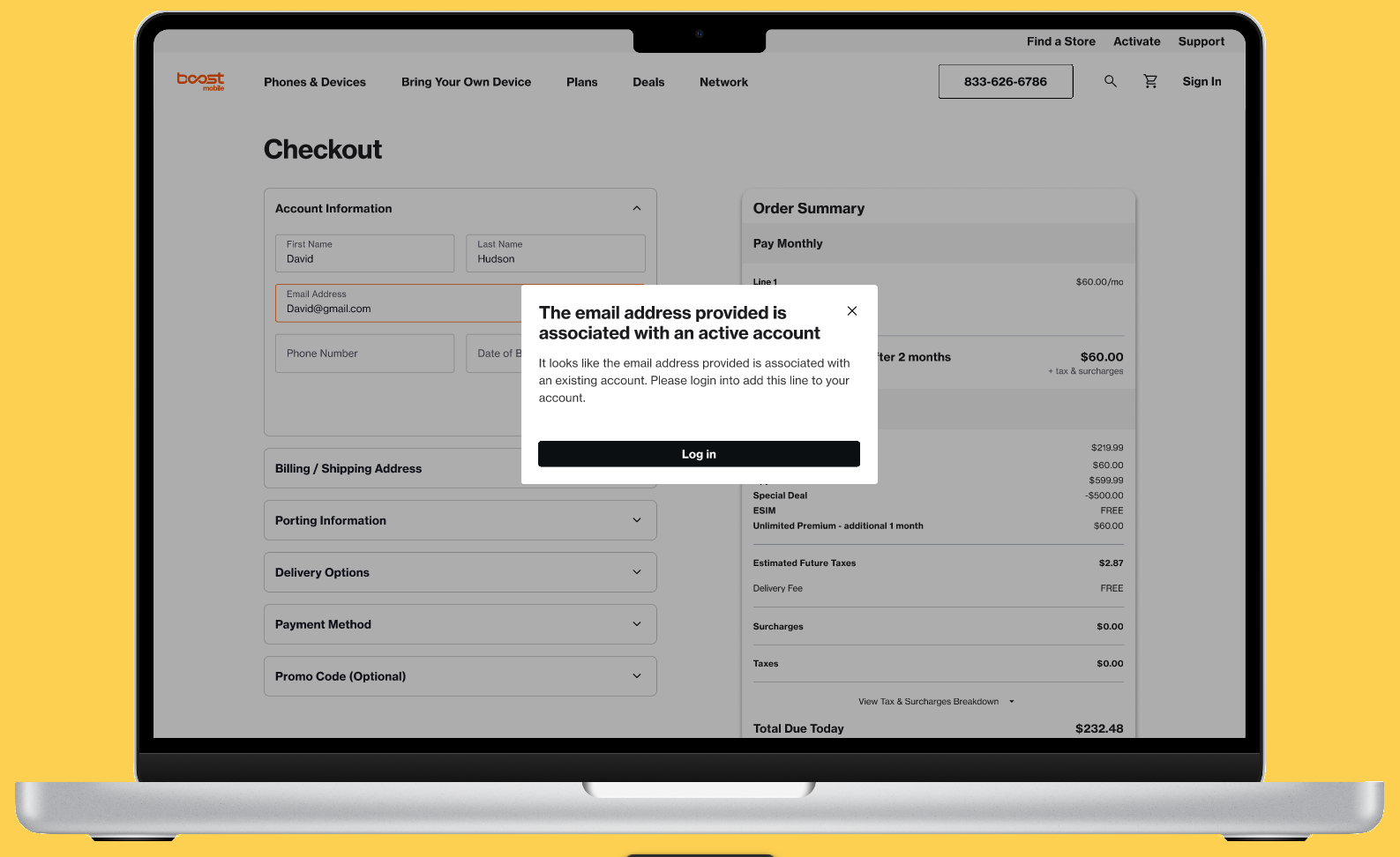
Returning users are highly valuable, yet our existing system treated them like strangers who took a wrong turn. When a previous user attempted to reactivate their service, they were met with a hard roadblock: a generic error message offering no next steps, no login redirect, and no explanation.
PROBLEM
Deactivated users attempting to reactivate their account are met with a roadblock.
This dead-end experience caused immediate friction, likely leading to high drop-off rates and abandonment. The goal was to redesign the reactivation flow to gracefully guide returning users back into the ecosystem, no matter their account status.
SOLUTION
Different paths lead to different outcomes.
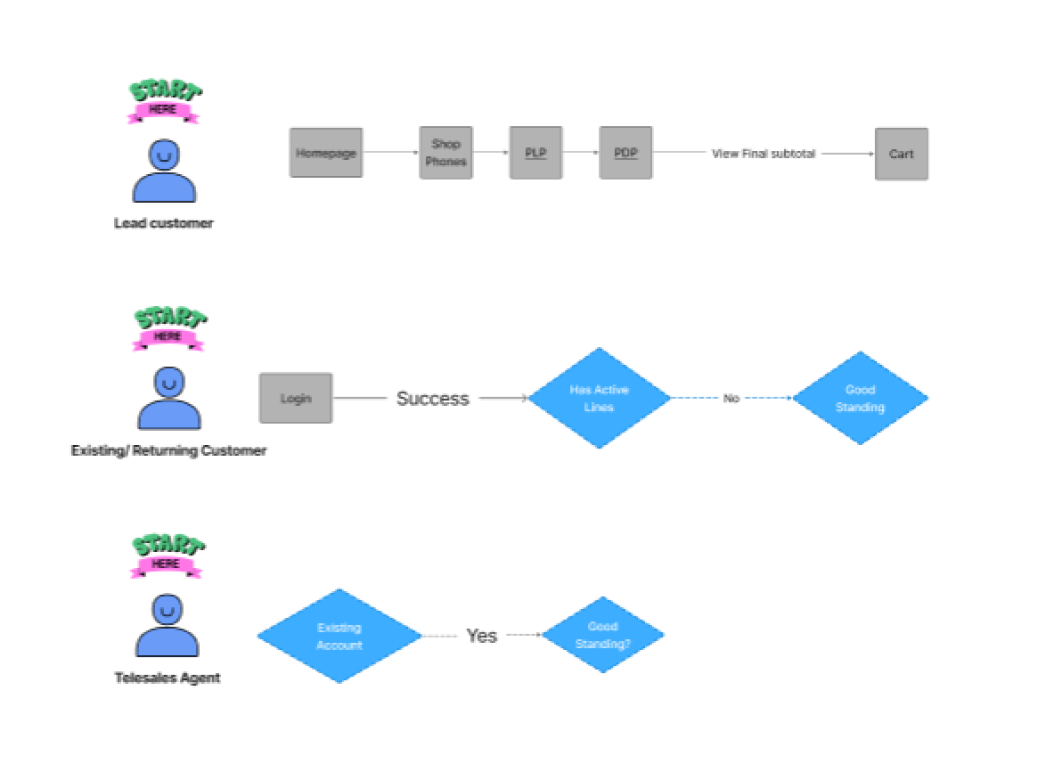
The PM on this project provided 4 flows with distinct technical scenarios. I drove the direction on which design system component to implement given each context.
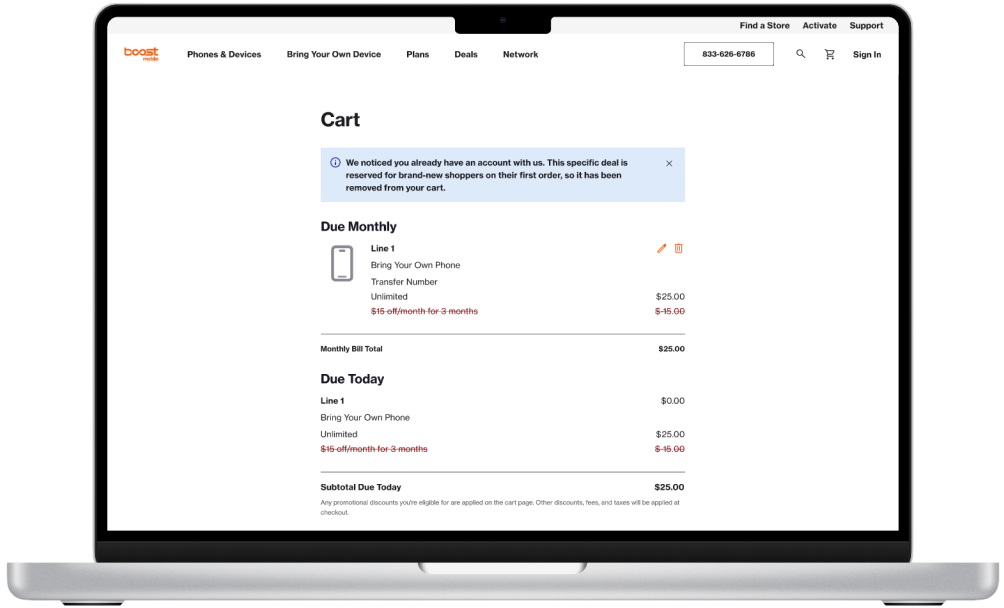
Global notification
Provide context to the user for their lack of eligibility.
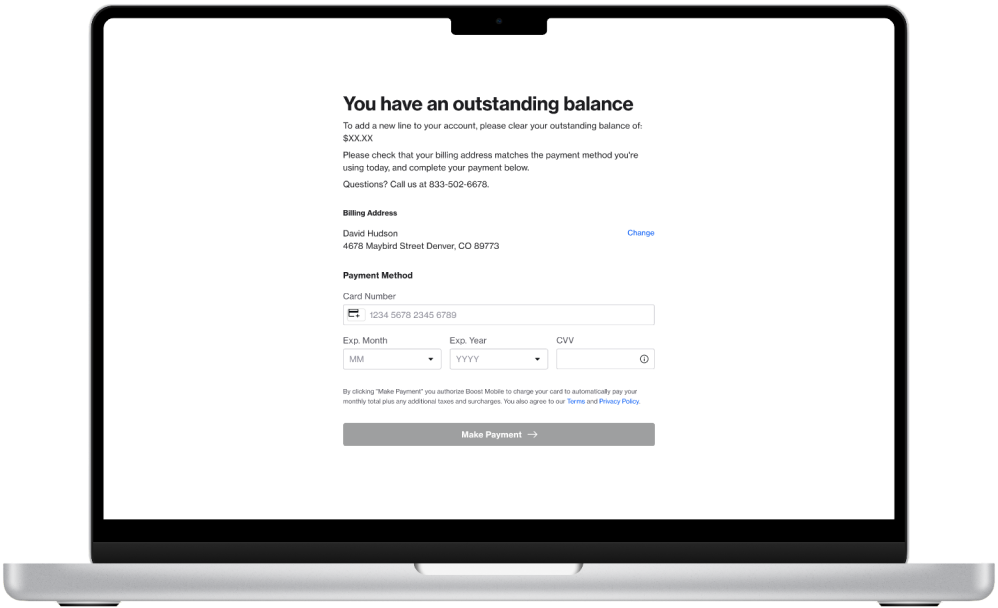
Interstitial
Some context requires a hard stop with an immediate opportunity for resolution.
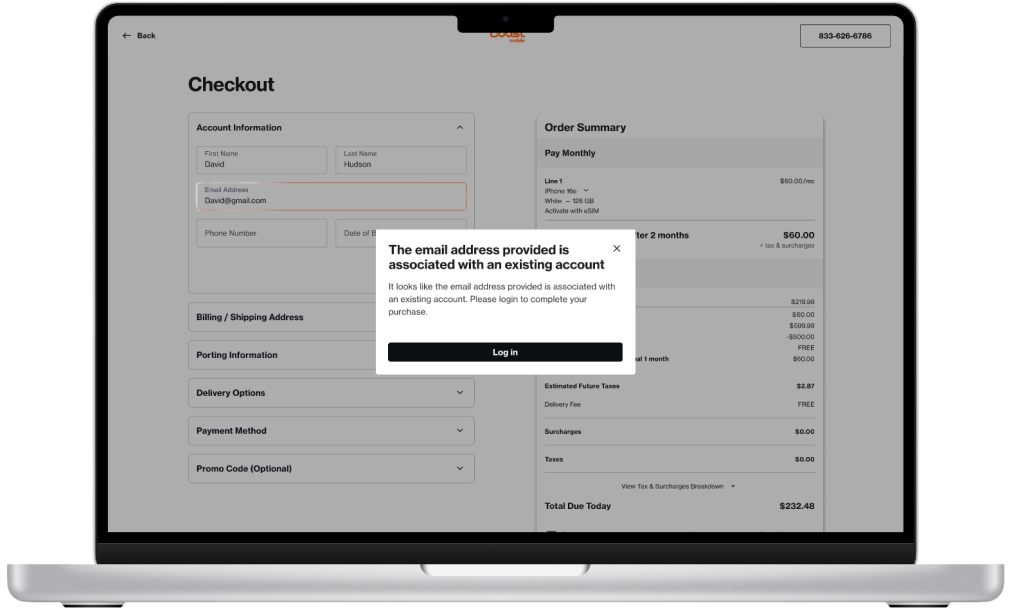
Modal
Give users an easy way out of the create account flow with a redirection.
PROCESS
Iteration through technical constraints.
The PM and TPMs provided additional considerations for design through weekly sprints. The User flows iterated along with my product deliverables until reaching a final version.
OUTCOME
Handoff & Implementation.
By replacing a dead-end error with actionable, contextual pathways, the new flow transforms friction into retention. Users are no longer abandoned at the door; they are actively guided back inside. A generic "Error 404" or "Action Failed" does not help anyone. Telling the user why an action failed and how to fix it is the cornerstone of trust.
To eliminate ambiguity during implementation, I leveraged Figma Dev Mode to structure the final handoff. By meticulously connecting component states, spacing variables, and logic for each edge case directly within the dev interface, the engineering team was equipped with build-ready specs that accelerated deployment.